

Advancements in Rubber Salt Bath Curing: The LCM Production Line
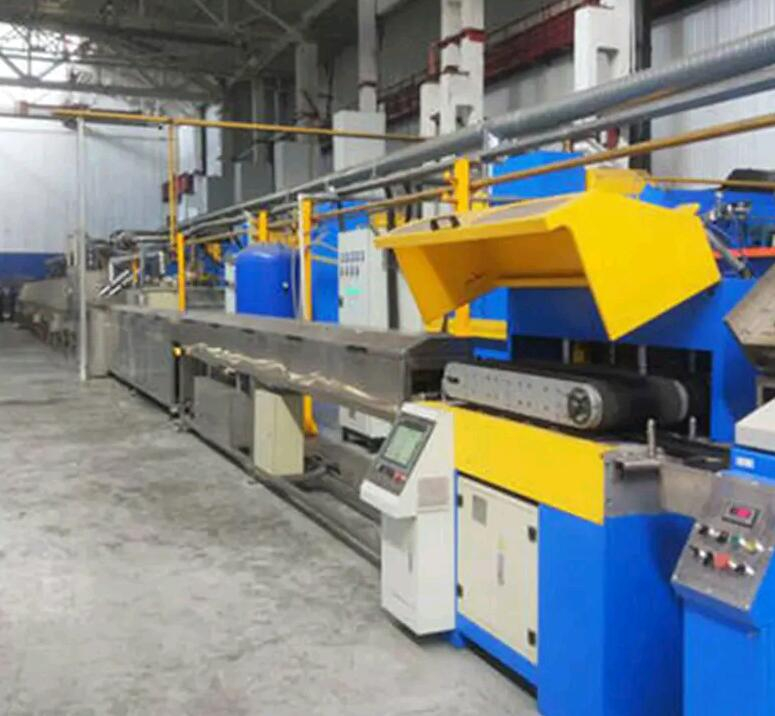
The RUBBER SALT BATH CURING PRODUCTION LINE (LCM) has evolved significantly to meet the growing demands of the rubber manufacturing industry. Its development reflects ongoing efforts to improve efficiency, product quality, and operational safety. The LCM system uses a molten salt bath to cure rubber, allowing for uniform heat transfer and precise control of temperature throughout the process.
Early production lines relied on batch processing, which limited throughput and required frequent manual intervention. Over time, continuous conveyor-based designs were introduced, enabling rubber products to move steadily through the salt bath. This advancement improved production efficiency and reduced variations in product quality. Modern LCM lines incorporate automated temperature monitoring and control systems, further enhancing consistency and reducing the potential for errors.
The development of the LCM line also emphasizes operational safety and ease of maintenance. Advanced designs provide better insulation of the salt bath, integrated safety systems, and accessible components for cleaning and inspection. These improvements minimize risks to operators and support longer service life of the equipment.
From a technical perspective, modern LCM lines allow precise adjustment of curing time and temperature, accommodating a range of rubber formulations and product specifications. The improved uniformity of heat distribution reduces internal stresses in the material, contributing to more durable and reliable products.
zjbaina.com/product/rubber-salt-bath-curing-production-line-lcm/rubber-salt-bath-curing-production-line-lcm.html
The new generation of salt bath vulcanization line of BAINA has unique advantages in producing rubber strips for automobile industry and construction industry: high efficiency and low energy consumption.
The BAINA salt bath production line (LCM)is designed with compact combination. Its prominent feature is that the waste salt produced after the initial purification of the adhesive strip is very low. It uses modem computers to handle production control systems including pressure control and remote data transmission. The automatic brine recycling system avoids environmental pollution from wastewater. The entire production line includes the vulcanizing conveyor, cooling and washing unit, traction, cutting and winding device.

 English
 Arabic
 Français
 Español
 Português
 Deutsch
 Türkçe
 Italiano
 Russian
 Romaian
 Português Brasileiro